Technology & Combat Characteristics
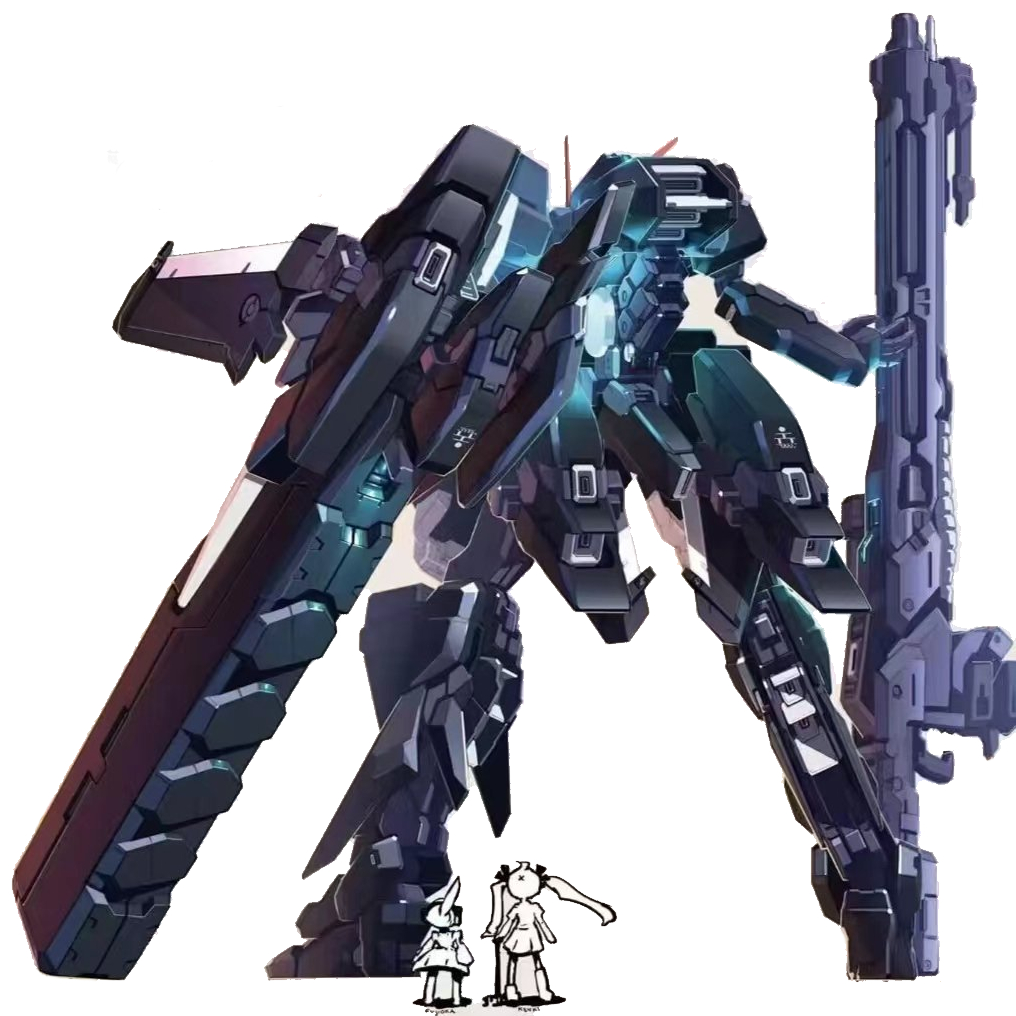
The RX-123 Gundam TR-S [Hazel Hrair] is a redesigned successor to the RX-121 Gundam TR-1 [Hazel], serving as the next-generation flagship model of the Earth Federation Forces and Titans following the RX-121-2P Gundam TR-1 [Hazel Owsla]. Retaining the drum frame structure and Primrose interchangeable system, it also features a transformation mechanism enabling conversion into mobile armor mode.
Its head unit maintains the Gundam-style design inherited from the Hazel lineage, adorned with a hawk-shaped figurine blade antenna, symbolizing the Titans’ insignia. The unit is armed with a physical projectile machine gun and a shield-mounted beam-disruption curtain missile pod.
Designed as an all-purpose machine, Hazel Hrair was intended to handle a wide range of missions independently by integrating all reinforcement parts tested throughout the TR series, alongside various redesigned components. In line with the objectives of the "Model Integration Plan," each component of the Hazel Hrair is designed to be reconfigurable via a Bellows Frame, enabling it to adapt to a variety of specifications. This system is supported by a set of standardized reinforcement parts managed through the Universal Conversion System. Examples include the Cockpit Unit, Nose Unit, and Stabilizer Unit of the Hazel Hrair. Initially, it was planned for official adoption as the core mobile suit of the decisive battle weapon Inle.
History
The TR Project—an initiative to develop the ultimate mobile weapon capable of adapting to any mission through a parts and equipment replacement system—reached a tentative conclusion with the RX-121-2P Gundam TR-1 [Hazel Owsla]. Alongside it, a wide array of reinforcement parts tested across the TR series was also finalized. The mobile suit originally intended to unify all of these advancements and serve as the next-generation mainstay unit was the RX-123 Gundam TR-S [Hazel Hrair]. However, its completion was severely delayed, creating the need for a temporary flagship unit in the interim.
In response, the RMS-154 Barzam was developed. Simplified from the Hazel Hrair's design, the Barzam omitted its transformation mechanism into MA form and was adapted for mass production following the relocation of its manufacturing facilities. Its deployment was limited, but it filled the operational gap. The delay in the Hazel Hrair's completion is believed to be the result of a shift in project direction toward the development of the RX-124 Gundam TR-6 [Woundwort], which introduced the “Universal Replacement System.”