Technology & Combat Characteristics
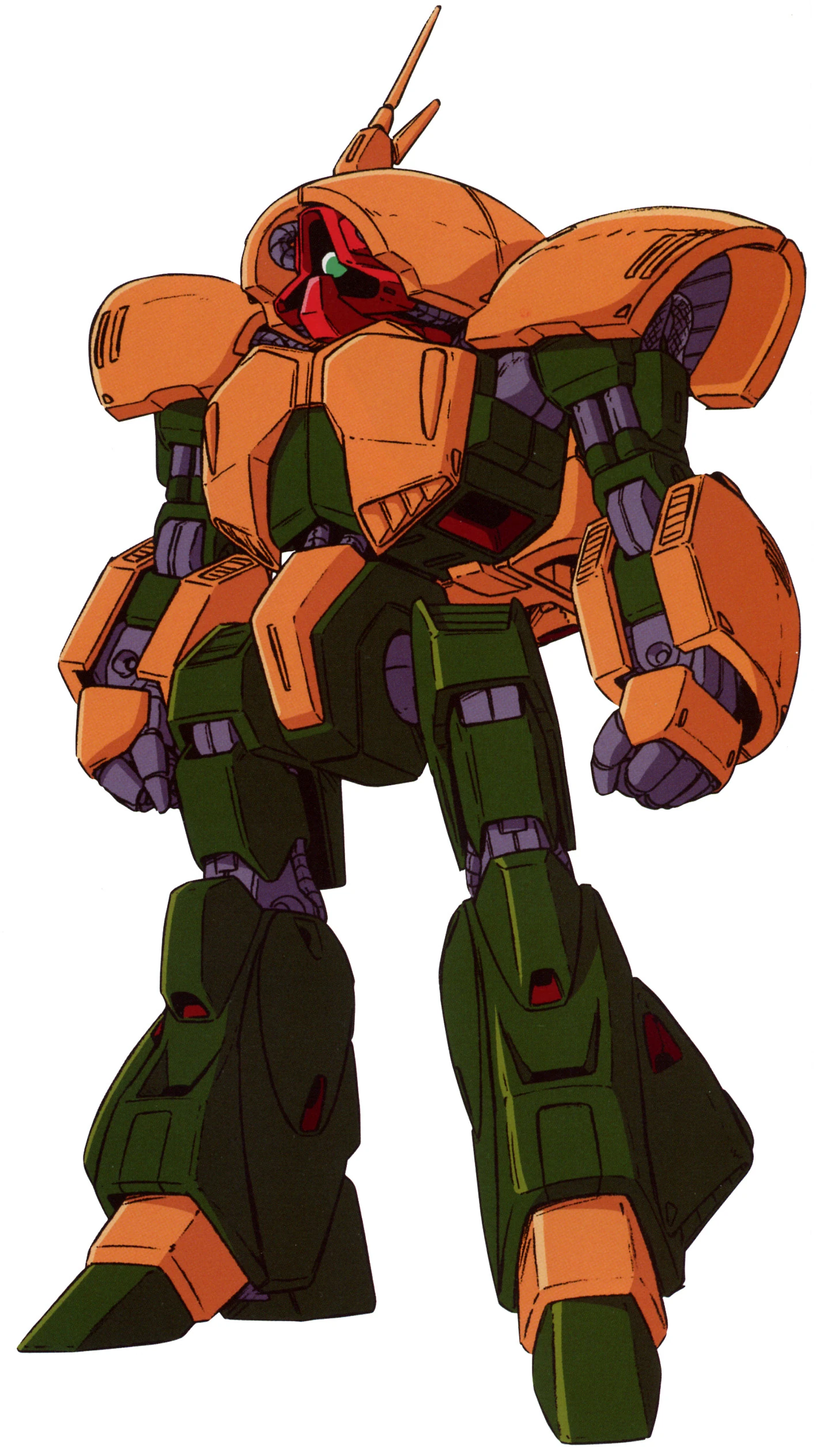
Developed at the Oakland Research Institute, one of the Newtype Research Institutes, the Asshimar was the first transformable mobile armor capable of self-sustained atmospheric flight. The “N” in its model number signifies its origins at a Newtype Research facility.
At the time, mobile suits relied on sub-flight systems (SFS) like the Base Jabber and Dodai Kai for aerial mobility. However, these took up valuable space on carrier ships and had critical vulnerabilities—if the SFS was shot down, the deployed mobile suits lost maneuverability and combat effectiveness. Additionally, sub-flight systems suffered from poor climbing performance, making them unsuitable for interception missions. To address these limitations, the Asshimar was developed as a fully independent, high-mobility unit capable of engaging and withdrawing at will.
The Asshimar's design featured additional sub mono-eye sensors along with the main camera sensor. The Asshimar's transformation mechanism is centered around its upper body folding into a disk-like shape, forming an aerodynamic lifting body. Its powerful leg-mounted engines provide fighter-jet-level mobility, granting it exceptional climbing speed and aerial maneuverability
The Asshimar’s armor is highly durable and bullet-resistant, but it has a notable weakness—the chest armor unfolds during transformation, making it vulnerable to attacks during the process . Another drawback is its limited armament—equipped with only a single beam rifle. This led to the development of the ORX-005 Gaplant, a higher-performance transformable mobile armor designed to address these shortcomings.
In the manga Mobile Suit Zeta Gundam Define, it was redesigned by Kyoshi Takigawa. New features include an increase in height, folding wings on the legs, additional thrusters in the legs and backpack, retractable twin machine guns in both forearms, and built-in missile racks on both shoulders. In addition, the large beam rifle was now stored on the side in MA mode (allowing two to be mounted), and mounted on the forearm in MS mode when not in use.
History
Development began in U.C. 0083, with the transformation system proving relatively simple due to its minimal impact on MS mode articulation. Its ease of mass production and strong performance made it a valuable asset for rebuilding the Earth Federation’s forces after the One Year War, leading to its official adoption. Despite this, its design philosophy lived on, influencing future atmospheric-transformable units such as the RAS-96 Anksha, which was introduced by U.C. 0096.